Regaining control through occupational therapy
Occupational therapist Marloes helps people rediscover their freedom
"I want to be able to get out and about on my own again" is one of the most common things occupational therapist Marloes Poppink hears. Several times a week, she helps people find a way to make that happen.
Marloes is an occupational and hand therapist. "A lot of the people who come to me are frightened of falling. They've lost confidence on a bike, maybe they've had a fall, they can no longer get on and off easily, or their balance isn't what it was," she explains.
Her first question is always the same: what would you like to be able to do again? "Some people want to go into town to do their shopping, or visit their children. Others just want to go out for a ride with their partner. What they all have in common is that they don't want to rely on other people. Sometimes a few small adjustments to their existing bike are enough. Other times, a low step-through bike is the better answer, one where you can touch the ground with both feet while still in the saddle. Whatever the solution, the goal is the same: getting outside, freely and independently."
“Marloes made it clear that falling simply isn't possible on a tricycle"
Out and about again
Wim Meijer knows exactly how that feels. After suffering a stroke, cycling on his old bike quickly became impossible. "I gave it a go, of course, and ended up in a hedge. Then I tried a standard tricycle at a local bike shop. The owner regretted that, because I really couldn't control it and knocked over half the bikes in the shop," he recalls with a laugh.
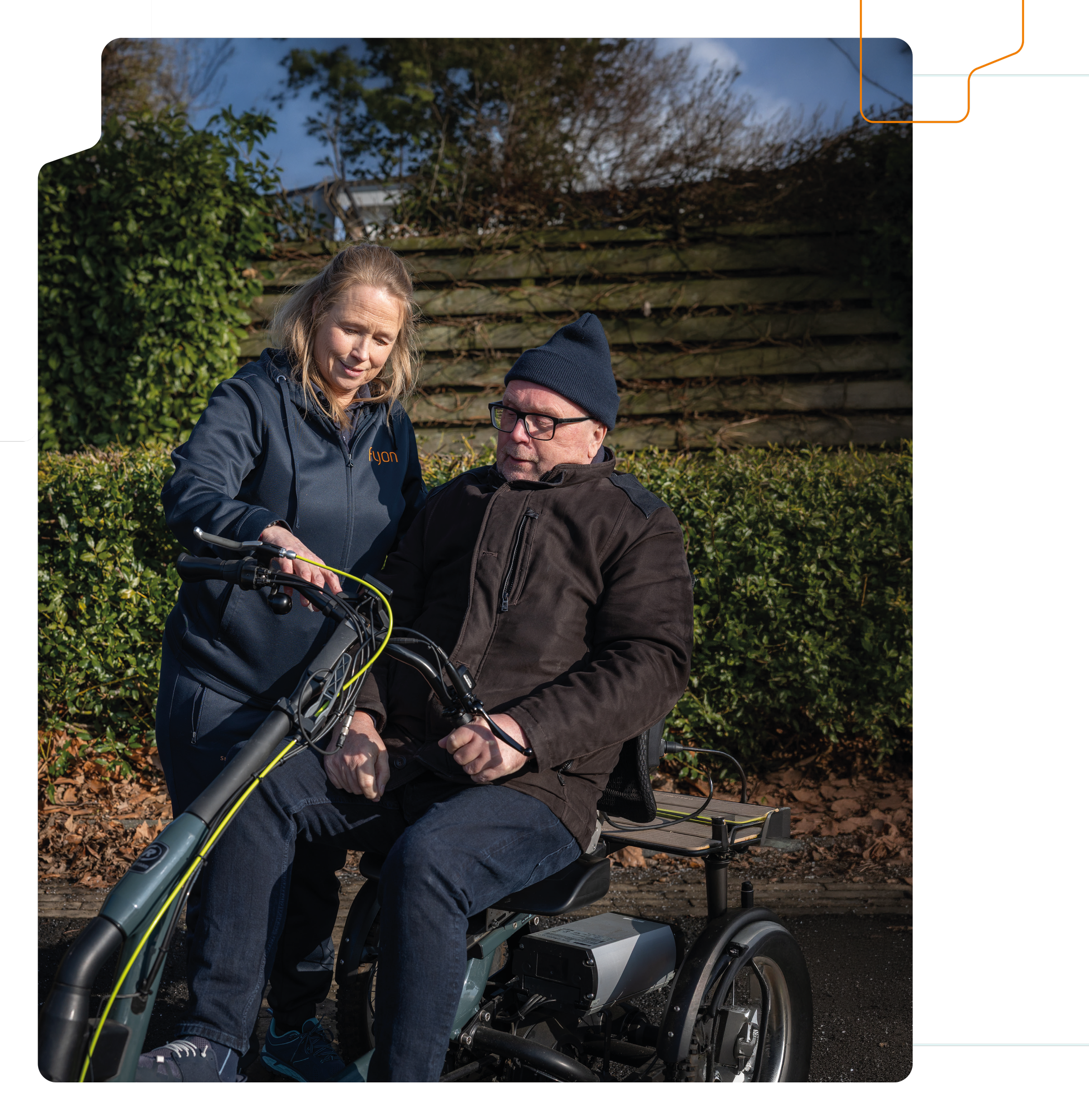
That's when Wim was referred to Marloes. His determination to regain his independence was clear. "Marloes put me on the Easy Rider in a car park, and a whole new world opened up. The weekend after I got the bike, I cycled 25 kilometres. I had my freedom back, it was brilliant."
Marloes sees that reaction often. "For most people, getting back on a bike is a revelation," she says. But she's quick to point out that switching to a tricycle takes adjustment.
"It's quite different from a standard bike, and people often underestimate that. On a standard bike, you steer with your upper body. On a tricycle, you don't need to — you just sit back and steer with your arms. What I often see is that someone gets on a tricycle for the first time and immediately says it's not for them. The experience is very different. But then they try the Easy Rider, which has a lower, more relaxed seating position, and that changes things. Even with limited strength in an arm or leg, it's still possible to cycle well, there are options to support that."
Cycling together
To help people feel confident and safe, Marloes always plans a few riding sessions with anyone who opts for a tricycle. "We always start slowly. I walk alongside and offer support. Each time, we go a little further. Eventually we cycle together along the routes they actually use, from home to the supermarket, for example, so they know exactly what to expect along the way. I also look at the home situation with them. Are there steps or bollards nearby? How do you get the bike in and out of the shed? Those details matter. Some people feel confident after a few sessions; others prefer to go out together a little more often before riding solo."
Wim found those first rides invaluable. "Marloes made it clear that falling simply isn't possible on a tricycle. It's a bit like switching from a regular car to a van, you need to take corners a little wider, because you're broader on the road. Having someone cycling behind you to point that out really helps."
Taking a significant step
For many people, choosing a tricycle is a significant step. It was for Wim. "You have to accept that a standard bike is no longer the right option. That takes some getting used to. But I'm genuinely delighted with my Easy Rider. It takes me everywhere, and honestly, it looks great too," he says. The Easy Rider has opened up his world in ways he didn't expect. Together with fourteen other tricycle riders, all between 50 and 70, he heads out most weeks when the weather is good. "We plan proper days out, stop somewhere for a coffee, visit places I'd never have gone to otherwise. I'm making the most of every minute." ■
Tips for your first rides on a tricycle:

Ride with someone else the first few times, as they can help you judge your width on the road.
Take corners wider than you think you need to, to avoid catching a wheel on the verge.
When stopping, keep your feet on the pedals rather than putting them down.
Apply the handbrake when getting on and off.
Use the start assist when setting off to make pulling away easier.
Don't try to steer with your upper body. Instead, sit back, relax, and steer with your arms.
Give yourself time to adjust. Start somewhere quiet with a smooth surface, then gradually move on to busier roads and more challenging conditions.