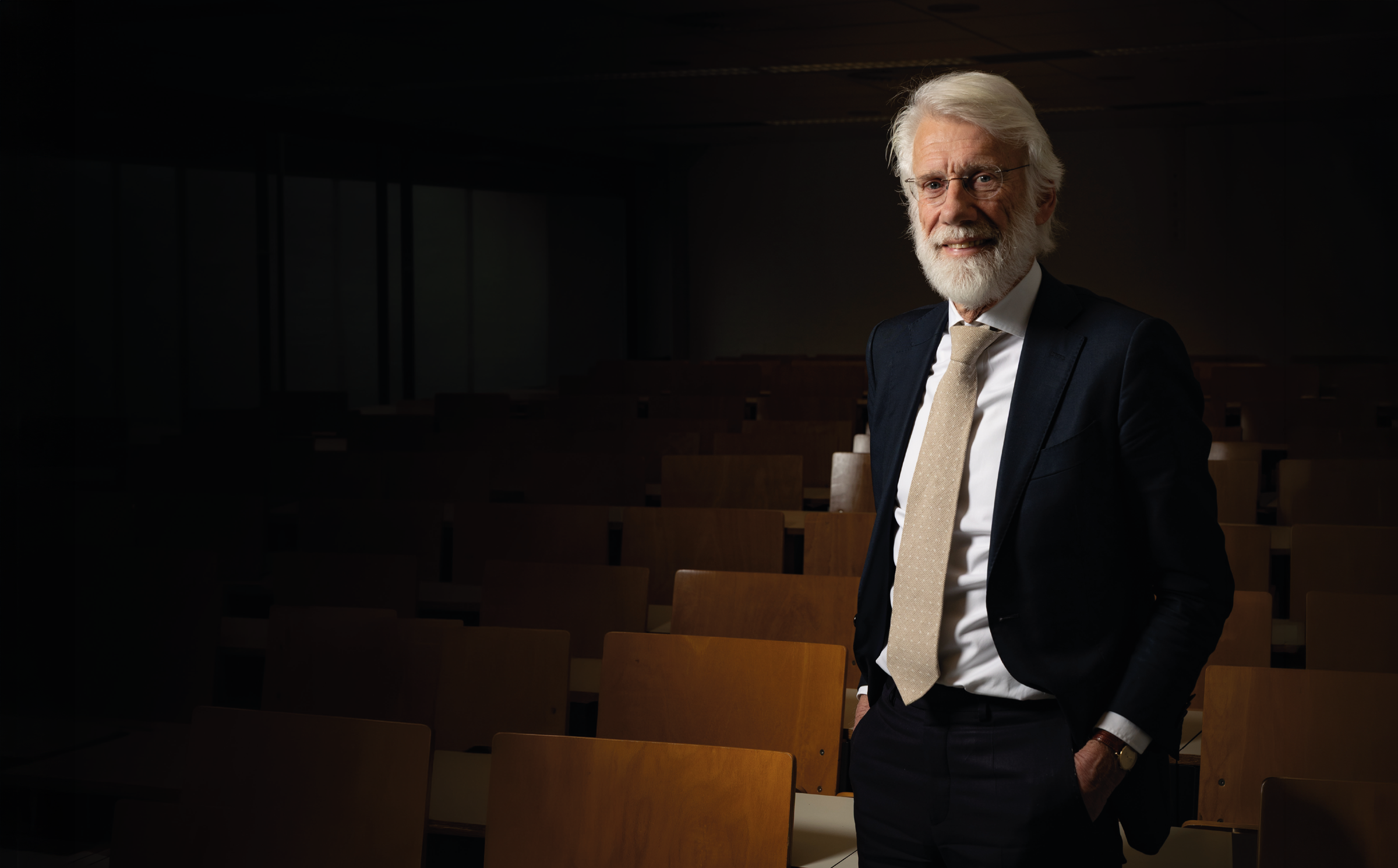
PROFESSOR ERIK SCHERDER:
‘Cycling keeps your
mind and body healthy’
Professor Erik Scherder is a neuropsychology professor at VU University Amsterdam, where he spends his days exploring one question: how do you keep your brain healthy? He researches, teaches, writes books, gives lectures, and shares his knowledge on television. His mantra: an active body is an active brain. For him, this means cycling for an hour every day, among other things. We asked him why that matters so much.
Professor Erik Scherder is als hoogleraar neuropsychologie aan de Vrije Universiteit (VU) elke dag bezig met de vraag: hoe houd je je brein vitaal?Hij doet onderzoek, geeft les, schrijft boeken, gaat het land in voor lezingen en deelt zijn kennis in tv-programma’s. Zijn mantra: een actief lichaam is een actief brein. Zelf houdt hij zich daaraan door onder meer elke dag een uur te fietsen. Waarom is dat eigenlijk zo goed voor je?
You live half an hour's cycle from the university. Why not take the tram or bus occasionally?
“Because challenging your brain every day is incredibly important. That's why I cycle to work every morning and back every evening. It reduces the risk of all kinds of physical problems and sharpens your cognitive abilities. You can see the same effect in studies of children who cycle to school rather than being driven: their brains are effectively reset after a night's sleep. Blood circulation gets going first thing in the morning, and they perform better across all subjects, from languages to maths.”
What actually happens in your brain when you cycle?
“Your heart works harder because cycling raises your heart rate, which pumps more blood to the brain, and blood flow is crucial. Cycling is also good for your brain's neurochemistry. When you exercise, your body produces nutrients for neurotransmitters like dopamine and serotonin, the substances that influence your motivation, mood, and sense of wellbeing. That's why you feel more energetic and positive after a ride. Cycling also stimulates the production of new blood vessels and nerve cells. People who exercise regularly are demonstrably better at managing stress and less likely to experience depression. The list of benefits is long. It really does keep the body and mind healthy.”
How does that show up in everyday life?
“The brain is made up of grey matter, like the nerve cell bodies, and white matter, which forms the connections between them. Cycling improves blood flow to that white matter, which is essential for what we call executive functions: planning, concentrating, and organising your day. Those connections can gradually deteriorate from around the age of thirty, so staying physically active makes an enormous difference. So hop on your bike, don't take the bus. You have to keep stimulating yourself to keep that blood flowing.”
“'Cycling is an excellent activity to do together. And it's proven to be good for your health”
What would you say to people recovering from illness or injury, or living with a disability, who find it hard to stay active?
“However difficult it is, make the effort. When people stop moving and find themselves stuck at home after a period of rehabilitation, many fall into a real low. The drive goes, the excitement goes, exercise disappears from their lives, and they stop going out. Getting from A to B on foot or by car often isn't possible, which makes a bike an ideal way back into the fresh air and among other people.
How much exercise someone needs is different for everyone, of course. Personally, I push myself: brisk walks, taking the stairs, cycling at a decent pace. But if you have a condition or injury and you're cycling with pedal assistance, that's already a genuine challenge for your body and brain. As long as you're challenging yourself, you're doing the right thing.”
vanRaam bikes are fitted with different levels of pedal assistance, from light (1) to powerful (3). In a rehabilitation setting, many people begin with higher assistance to let their muscles gradually adjust to the movement. As they improve, they reduce the assistance in consultation with their therapist, building towards cycling more and more under their own steam.
Professor Erik Scherder is als hoogleraar neuropsychologie aan de Vrije Universiteit (VU) elke dag bezig met de vraag: hoe houd je je brein vitaal?Hij doet onderzoek, geeft les, schrijft boeken, gaat het land in voor lezingen en deelt zijn kennis in tv-programma’s. Zijn mantra: een actief lichaam is een actief brein. Zelf houdt hij zich daaraan door onder meer elke dag een uur te fietsen. Waarom is dat eigenlijk zo goed voor je?
You mentioned the positive effect of cycling on happiness hormones. Does that matter in rehabilitation too?
“Absolutely. Every rehabilitation programme is different, but imagine being able to get back outside on a bike; that's a real boost for the brain. The first ride will be hard, but setting yourself a goal stimulates the brain. You create an expectation, and when you achieve it, you feel satisfied. That satisfaction drives you to get back on the bike and produce more dopamine. You're outside, you're covering distance again — and that feeling of progress triggers even more dopamine and endorphins. You want to carry on. You enter a positive cycle.”
So fresh air is very important?
“Absolutely. All exercise is beneficial, even a stationary bike is better than nothing. But outdoors, you give your brain the full experience. The most stimulating environment, according to the research, is nature. Trees, parks, water, these are best for cognitive function. In a busy city, you're focused on not getting knocked over, so head for the heath, the woods, or the park when you can.
There's the social side too. Research into so-called Blue Zones — places in the world where people live unusually long lives — consistently finds that community and looking out for one another are the most important factors. Cycling is an ideal activity to do together, and that social connection has proven health benefits.”
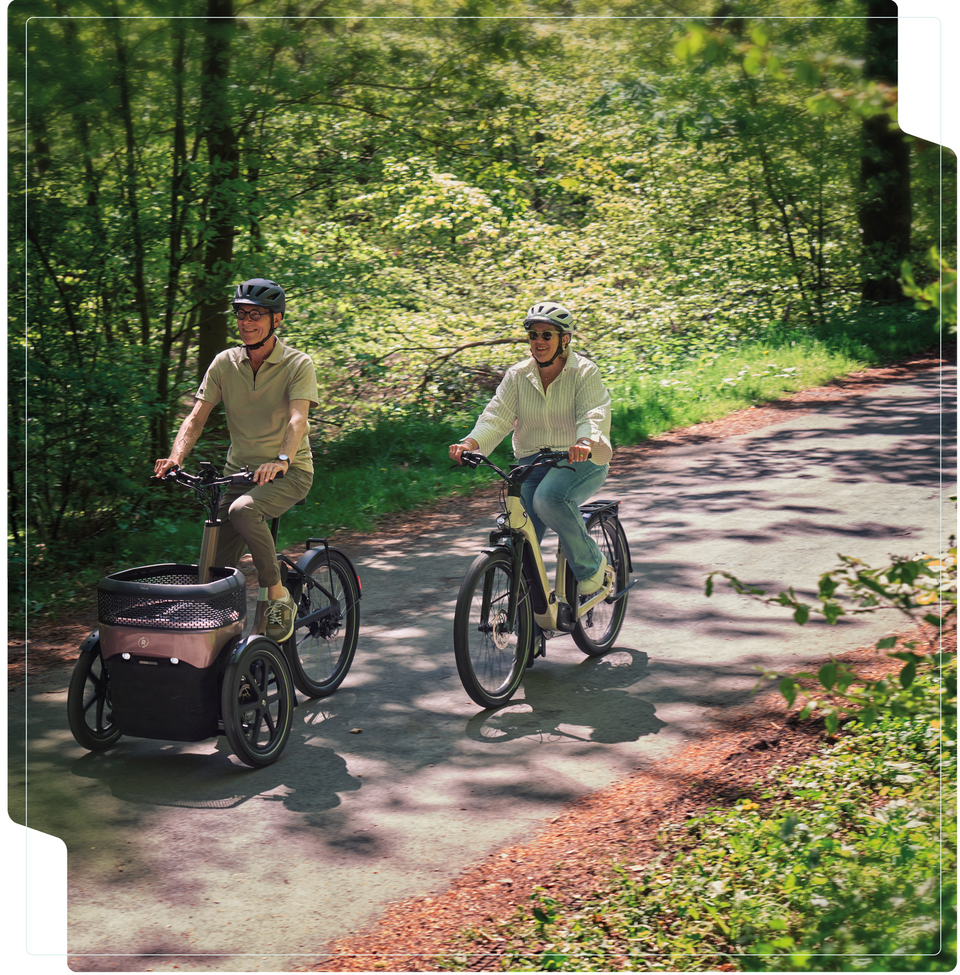
“Cycling outdoors enriches the mind.
The most stimulating environment,
according to the research, is nature — trees, parks, water”
What would you say to someone unsure whether an adapted bike is right for them?
“Don't hesitate. The beauty of cycling is that even if walking is difficult, or you're getting older, you can still exercise. You're seated and moving at the same time. That's a golden combination, and it opens doors for a great many people. Especially if a tricycle solves the balance question. Stopping exercise simply isn't an option. The most common conditions — high blood pressure, type 2 diabetes, obesity — are silent threats to both body and mind. Keep them at bay. Get out of the house.” ■